Hair topper
Covers the part, crown, or top. Clips into your own hair and relies on it for blending, so it needs healthy hair at the sides and back. The lightest, coolest option and the smallest commitment.
A topper covers the part, hairline, or crown and lets the rest of your own hair stay out. Fitted properly, in hair that matches yours, nobody can tell where your hair ends and the piece begins. Flora has fitted hair toppers for women from her Teaneck studio since 2005, in stock and custom, by appointment.
“A topper hides thinning. It does not hide you.”
A topper is a partial piece. You will also hear it called a wig topper, a hairpiece, or simply a top piece; they all describe the same thing. It sits on top of the head and clips into your own hair, covering a widening part, a thinning crown, or diffuse thinning across the top, while your hair at the sides and back stays out and does the blending. That is the whole idea, and it is also the limitation: a topper needs enough hair left to anchor to.
This is the honest dividing line between a topper and a full wig. If you still have hair around the sides and back and the thinning is on top, a topper is usually lighter, cooler, and less of a commitment. If hair loss is extensive, or you simply do not want to think about blending every morning, a full wig will serve you better. Flora will tell you which one your hair actually calls for, including when the answer is the one you were not hoping for.
There is a third option people rarely hear about. The Flora Illusion Fall™ can be worn farther back on the head as a topper, giving fuller coverage than a standard topper without the weight of a full wig. Whether it suits you depends on your pattern of thinning, which is exactly the sort of thing a fitting is for.
Three pieces, three amounts of coverage. The right one is decided by how much hair you have, where it is, and how much blending you want to do each morning.
Covers the part, crown, or top. Clips into your own hair and relies on it for blending, so it needs healthy hair at the sides and back. The lightest, coolest option and the smallest commitment.
Covers most of the head from behind the front hairline back, with your own hair blending over the top. Fuller coverage than a topper without the weight of a full wig. The in-between answer most people have never heard of.
Covers everything and asks nothing of your own hair. No anchoring, no blending, no morning decisions. The answer for extensive loss, or for anyone who simply wants to put the piece on and be done.
Toppers come in different base shapes and sizes because thinning does not happen the same way for everyone. The base has to cover the area with a margin, which is why sizing is driven by your pattern rather than by head size alone.
The most common reason clients come in. A topper with a natural-looking part covers the gap and puts density back where the scalp has started to show.
Most commonCoverage placed farther back, sized to the area that has opened up, and blended into the hair around it.
Targeted coverageWhen density has dropped across the whole top rather than in one spot, a larger base restores volume without a hard edge.
Best for overall volumeFront placement is the hardest thing to get right and the most obvious when it is wrong. It is worth doing in person.
Precision fittingSome clients have all their hair and simply want more of it. A topper adds density and length without extensions.
No hair loss requiredWhen thinning has gone past what a topper can anchor to, an Illusion Fall™ or a full wig is the more comfortable answer.
When to size up
A topper is only convincing if it disappears into the hair around it. That is a matching problem before it is a product problem, and it is why the fitting cannot really be done from a catalogue.
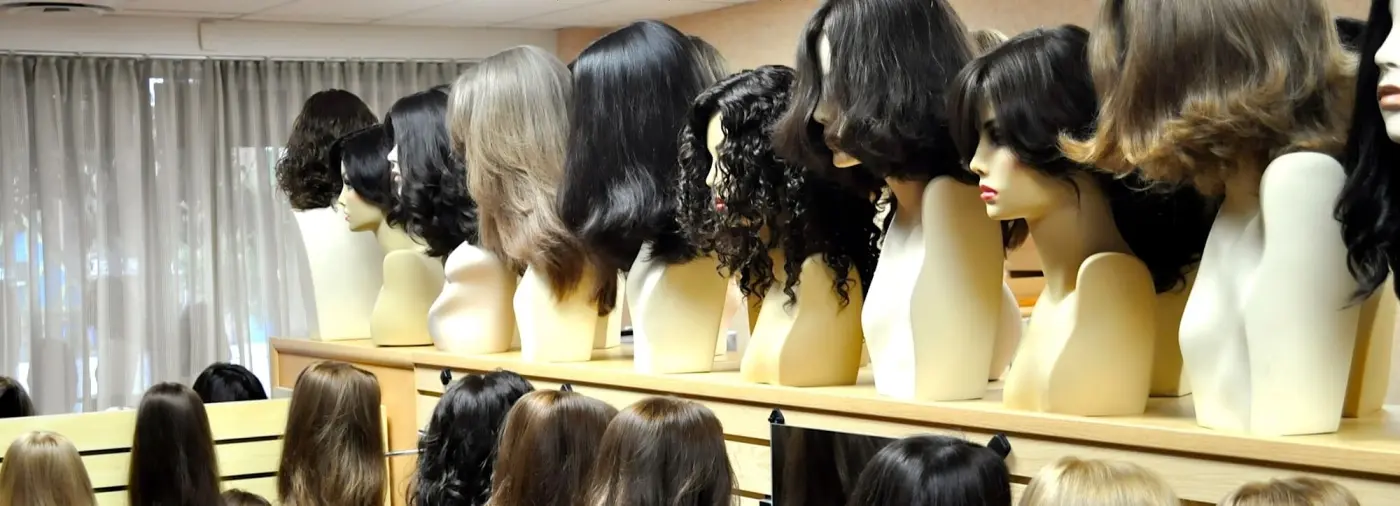
Flora looks at where you are thinning, how much hair there is to anchor to, and how you wear it day to day.
Compare pieces matched to your color and texture. Most clients are surprised how much the base shape changes things.
Placement, attachment, and a cut that blends the piece into your own hair so there is no visible line.
How to position it, how to vary the clips, and how to wash and care for it at home.
A typical consultation runs fifteen to thirty minutes. Come with your hair as it normally looks rather than freshly styled, and if you have a photograph of your hair before the thinning, bring it.
Thinning from chemotherapy, alopecia, thyroid conditions, or medication follows different patterns and different timelines, and it may qualify for insurance reimbursement when a physician prescribes the piece and it is documented as a cranial prosthesis.
Cranial Prosthesis & InsuranceIf you know thinning is coming, being seen while your color, texture, and density are intact makes the match far more precise.
A topper needs hair to clip into. When there is not enough, a full wig or an Illusion Fall™ is the more comfortable and more secure option.
Virtual consultations and worldwide shipping are available using photos, measurements, and a hair sample where possible.
For advice specific to your hair, call (201) 833-4060 or reserve a private fitting.
A hair topper is a partial hair piece that sits on the top of the head, covering the part, hairline, or crown while the rest of your own hair stays out and visible. It clips onto the hair you still have, which is what separates it from a full wig.
It depends on how much hair you still have and where you want coverage. A topper needs enough hair around the sides and back to anchor to and to blend with, so it suits widening parts, a thinning crown, or diffuse thinning on top. If hair loss is extensive or you want to stop thinking about blending altogether, a full wig is usually the better answer. Flora will tell you honestly which one fits your hair.
Coverage. A topper covers a specific area on top and relies on the hair around it to blend. A fall, like the Flora Illusion Fall, is worn farther back and covers most of the head, so it gives fuller coverage than a topper while staying lighter and cooler than a full wig. It suits thinning that has spread past what a topper can comfortably cover.
Clips put tension on the hair they attach to, so placement matters and it should be varied rather than clipped to the exact same strands every day. At your fitting Flora will show you how to position and rotate the piece, and can suggest tape tabs or a combined attachment if your hair is fine or fragile.
The base needs to cover the area of thinning with a margin, so sizing is driven by where you are losing hair rather than by head size alone. This is genuinely hard to judge from photographs, which is why fittings are done in person wherever possible.
That is the whole point of the fitting. Design by Flora works in unprocessed European human hair, which takes color naturally, and Flora matches to your own hair in the studio rather than to a color ring. Bring your hair as it normally looks.
Both. The Teaneck showroom carries a range of ready-to-wear toppers, and many clients are fitted, cut, and styled in a single visit. When nothing in stock is right, Flora can arrange custom hair toppers built to your pattern of thinning, which generally takes six to eight weeks.
Yes. The first cut and style is included with a Design by Flora topper so the piece blends with your own hair and suits your face. Clips are replaced free for the life of the piece. Chemical services such as color are separate.
It depends on how often you wear it and how it is cared for. Human hair pieces respond to the same things your own hair does: heat, product, friction, and sun. Wash and set service is available at the studio, and Flora will show you how to care for it at home.
Fittings are private and unhurried, and there is no obligation to buy. Clients come in from Englewood, Paramus, Fair Lawn, Fort Lee, and across Bergen County and North Jersey, as well as New York. Most clients say the hardest part was making the appointment.